Consult-led plasma technology used for selected cosmetic skin-tightening concerns. Suitability, risks and visible downtime are assessed before treatment.
Intro from
$249$349
Duration
60–120 mins
What is Plasma Fibroblast?
Plasma Fibroblast is a non-surgical skin tightening treatment that uses ionised gas (plasma) to create precise micro-points on the skin's surface. These controlled micro-injuries trigger your skin's natural wound-healing response, stimulating fibroblast activity and deep collagen remodelling to tighten, lift and renew skin without cutting or ablating surrounding tissue.
At MÜNE Aesthetics, Plasma Fibroblast is performed using the Plamere plasma pen within a nurse-led pathway. The device creates a controlled plasma arc between the tip and skin surface. Suitability, expected downtime, risks and alternatives are discussed before any treatment is recommended.
Plasma Fibroblast is an excellent non-surgical alternative for clients who want visible tightening and lifting without the cost, risks or recovery of surgery. It is particularly effective for localised concerns — hooded eyelids, under-eye laxity, smoker's lines around the mouth, nasolabial folds, jawline definition, neck crepiness and body areas such as the knees, abdomen and upper arms.
A consultation is required before any Plasma Fibroblast treatment. This ensures your skin is assessed for suitability, your Fitzpatrick skin type is determined, and a personalised preparation plan is developed. We do not perform this treatment on the same day as your consultation — proper skin preparation is integral to how we achieve consistent, safe results.
How does it work?
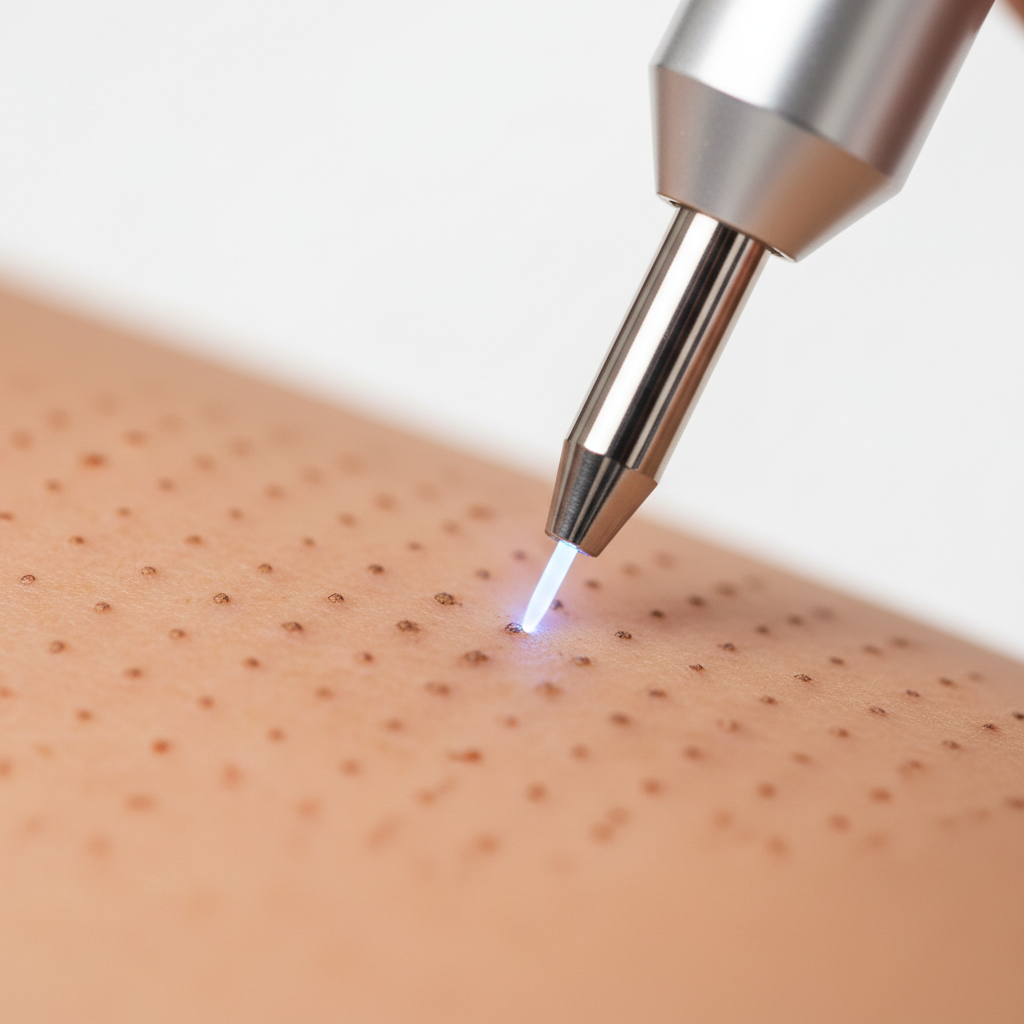
The Plamere plasma pen works by converting atmospheric gas into plasma — the fourth state of matter. When the device tip is held close to the skin, a tiny arc of plasma energy jumps between the tip and the skin's surface. This arc creates a microscopic point of contact where the tissue instantly contracts and sublimates (turns from solid to gas without passing through a liquid phase), leaving a tiny carbon crust.
These micro-points are delivered in a precise grid pattern across the treatment area. Each point triggers a controlled thermal injury that stimulates the wound-healing cascade: fibroblasts (the cells responsible for producing collagen and elastin) are activated, new collagen is synthesised, and the surrounding tissue contracts and tightens. The result is progressive skin tightening, lifting and renewal that continues to improve over 4–8 weeks as collagen remodelling unfolds.
Unlike electrical current devices, the Plamere generates true plasma energy, which allows for extremely precise treatment with minimal thermal spread to surrounding tissue. This precision is what makes it possible to treat delicate areas like the eyelids and around the eyes safely.
What concerns does it help with?
Who is it suitable for?
Plasma Fibroblast is most suitable for clients with Fitzpatrick skin types I–III (fair to medium skin that burns easily and tans lightly). During your consultation, your nurse will assess your Fitzpatrick skin type, skin condition and treatment goals to determine suitability.
The treatment is ideal for clients wanting to tighten and lift skin without surgery. Common treatment areas include: • Small areas: under eyes, upper eyelids (hooded eyes), smoker's lines, nasolabial folds • Medium areas: upper face (excluding eyelids), lower face, fox eye lift, jawline contouring • Large areas: full face, neck, décolletage • Body areas: knee lift, abdominal tightening, upper arm tightening (price guide only — consultation required for accurate pricing)
A consultation is required before treatment to confirm suitability, assess skin type and develop your personalised preparation protocol.
Who may not be suitable?
Plasma Fibroblast is not suitable for all skin types and skin conditions. Your safety is our priority, and the following are contraindications:
Fitzpatrick skin types IV–VI (olive, brown and dark skin): Plasma energy carries a higher risk of post-inflammatory hyperpigmentation in darker skin types. Clients with Fitzpatrick types IV–VI are generally not suitable candidates for Plasma Fibroblast. Your nurse will assess your skin type during consultation.
Other contraindications include: pregnancy and breastfeeding; active acne, infection or open wounds in the treatment area; uncontrolled diabetes; use of isotretinoin (Roaccutane) within the last 6 months; history of keloid or hypertrophic scarring; active eczema, psoriasis or dermatitis in the treatment area; compromised immune system; blood-clotting disorders; pacemaker or implanted electronic devices; and current use of photosensitising medications.
If you have had recent sun exposure, a spray tan, or have recently used retinol, AHAs/BHAs or other active skincare, your preparation timeline may need to be adjusted. This is why a consultation is essential — your nurse will review your full medical and skin history before proceeding.
Options & Pricing
Small Area
Under eyes, upper eyelids (hooded eyes), smoker's lines or nasolabial folds. Ideal for targeted tightening of small, localised areas.
Medium Area
Upper face (excluding eyelids), lower face, fox eye lift or jawline contouring. Broader tightening across multiple facial zones.
Large Area
Full face, neck or décolletage. Comprehensive tightening across larger treatment areas.
Body Tightening
Knee lift, abdominal tightening or upper arm tightening. Price is a guide only — consultation required for an accurate quote as body areas vary significantly.
What should I expect?
Your Plasma Fibroblast journey begins with a consultation, not the treatment itself. Here's what to expect:
Consultation (required): Your registered nurse will assess your skin, determine your Fitzpatrick skin type, review your medical history and discuss your goals. If you are suitable, a personalised preparation plan is developed and your treatment is scheduled — typically 2–8 weeks later depending on your skin's current condition.
On treatment day: The area is cleansed and a topical numbing cream is applied and left for 30–45 minutes to ensure you are comfortable throughout. Once the area is numb, your nurse uses the Plamere plasma pen to create a precise grid of micro-points across the treatment area. You may feel a warm, prickling sensation — most clients describe it as mild and tolerable thanks to the numbing. Treatment time ranges from 60–120 minutes depending on the area being treated.
Immediately after: Tiny carbon crusts (small dark dots) will be visible across the treated area. The skin may appear red and slightly swollen, particularly around the eyes where swelling can be more pronounced in the first 24–48 hours. Your nurse will apply a soothing post-care product and provide detailed aftercare instructions before you leave.
Preparation
Proper skin preparation is integral to how we achieve consistent, safe results with Plasma Fibroblast. We typically prepare clients for 2–8 weeks prior to treatment, depending on their skin's current condition and history. This preparation protocol is not optional — it is a core part of our clinical process and directly impacts your safety and outcome.
During the preparation period, your nurse may prescribe a tailored skincare routine to optimise your skin barrier, even out skin tone, and reduce the risk of post-inflammatory hyperpigmentation. This typically includes: a broad-spectrum SPF 50+ sunscreen worn daily (non-negotiable); pigment-regulating actives if needed; barrier-supporting hydration; and the cessation of any ingredients that could sensitise the skin (such as retinol, AHAs, BHAs, vitamin C and exfoliating acids) for a specified period before treatment.
You will also be asked to avoid sun exposure, solariums, spray tans and self-tanning products for at least 2 weeks before treatment. If you have recently used isotretinoin (Roaccutane), a minimum 6-month waiting period is required before Plasma Fibroblast can be performed.
Your exact preparation timeline will be determined during your consultation based on your Fitzpatrick skin type, current skincare routine, sun exposure history and the area being treated. This individualised approach is why we do not offer same-day treatment — the preparation phase is essential for safe, predictable results.
Aftercare
Aftercare is critical to your result. Following your Plasma Fibroblast treatment, you will receive detailed written instructions. Key aftercare guidelines include:
Keep the treated area clean and dry for the first 24–48 hours. Do not pick, scratch or exfoliate the carbon crusts — they must shed naturally over 5–7 days. Picking can cause scarring and hyperpigmentation. Apply only the aftercare products recommended by your nurse. Avoid makeup on the treated area until the crusts have fully shed. Avoid direct sun exposure and wear SPF 50+ daily once the skin has healed. Avoid swimming, saunas, steam rooms and strenuous exercise for at least 5–7 days. Avoid skincare containing active ingredients (retinol, AHAs, BHAs, vitamin C, fragrance) on the treated area for at least 2 weeks or until fully healed. Avoid alcohol-based or drying products. Do not use skin-bleaching or pigment-correction products on the treated area during healing unless directed by your nurse.
Diligent sun protection is essential for at least 4–8 weeks after treatment to prevent post-inflammatory hyperpigmentation, particularly in the Perth summer. If you are prone to pigmentation, your nurse may recommend specific post-care products to support even healing.
Downtime & recovery
Yes — Plasma Fibroblast involves visible downtime. Tiny carbon crusts (small dark dots) form across the treated area and naturally shed over 5–7 days. During this time, the treated area is visibly marked, so most clients prefer to take time off work and social activities. Swelling is common, particularly around the eyes, and can be more pronounced in the first 24–72 hours. The skin may appear pink and slightly rough for the first week. Once the crusts have shed, the underlying skin may remain slightly pink for another 1–2 weeks before settling. Full healing typically takes 2–4 weeks, with collagen remodelling continuing beneath the surface for up to 8 weeks.
Results
Visible response develops progressively after surface healing and varies by client, area and treatment plan. A review after full healing is required before any further treatment is considered. No specific degree or duration of tightening is guaranteed; your registered nurse will discuss realistic expectations, risks and alternatives during consultation.
Individual results vary. No specific outcome is guaranteed. Your registered nurse will discuss realistic expectations during your consultation.
Typical treatment journey
Consultation (assessment, Fitzpatrick typing, preparation plan) → 2–8 week preparation period (tailored skincare, SPF, skin optimisation) → Treatment day (numbing, plasma pen treatment, 60–120 mins) → 5–7 days visible downtime (carbon crusts shed) → 2–4 weeks full surface healing → 4–8 weeks collagen remodelling and progressive tightening → review. For larger or more complex areas, a second session may be recommended after 8–12 weeks of full healing.
Complete your results
Often combined with
Clinically logical treatment pathways — selected based on how treatments complement each other for your goals.

Why we use this treatment at MÜNE
At our nurse-led clinic in Victoria Park, Perth, every treatment is delivered by a registered nurse — never delegated. We pair clinically validated technology with a considered, minimum-effective-dose philosophy: the least intervention required to achieve a meaningful, natural result.
Each plan is personalised to your skin, body and goals, and delivered in a calm clinical sanctuary designed to feel restorative rather than clinical. Technology alone isn't enough — it's the combination of clinician, evidence and environment that creates results.
Frequently Asked Questions
Every consultation begins with a conversation.